Vitamin D3 Dosage 2026: How Much Should You Take?
The recommended amount of vitamin D for adults is 600 IU (15 mcg) a day up to age 70, and 800 IU (20 mcg) from 71. The daily ceiling is 4,000 IU. That has not changed since 2010, and it did not change in 2025 or 2026.
Most people who supplement take 1,000–2,000 IU — above the recommendation, well under the ceiling. If a blood test puts you under 20 ng/mL, you need more for a while: see what to take at your level.
The link below is an affiliate link. We may earn a commission; it never changes the pick. How we choose.
Not medical advice. If you are pregnant, under 19, over 75, or have kidney disease, sarcoidosis or a history of high blood calcium, this page is not for you — those doses are set by a clinician.
Original research Updated 27 August 2026 · we read 1,500 vitamin D labels filed with the NIH to check what the market actually sells against the recommendation — the findings are below.
On this page
What to take at your level
If you have had a 25(OH)D blood test, this is the only table you need. Every dose on this page keys to these four thresholds — 12, 20, 30 and 50 ng/mL.
| Your 25(OH)D | What it means | Dose | For how long | Add K2? |
|---|---|---|---|---|
| Not tested | Unknown | 1,000–2,000 IU/dayNature Made Vitamin D3 2000 IU $0.05/day — the dose to do it at if you are supplementing untested | Ongoing | Optional |
| Under 12 ng/mL | Severe deficiency | 4,000–5,000 IU/day, or a prescriptionNature Made Vitamin D3 5000 IU $0.10/day — a supervised course, not a default | 8–12 weeks, then retest — with a doctor | Yes |
| 12–20 ng/mL | Deficient | 2,000–4,000 IU/dayNature Made Vitamin D3 2000 IU $0.05/day — two of them for 4,000 IU | 8–12 weeks, then retest | At 4,000 |
| 20–30 ng/mL | The disputed strip | 2,000 IU/dayNature Made Vitamin D3 2000 IU $0.05/day | Ongoing; retest in 3 months | Optional |
| 30–50 ng/mL | Sufficient by every standard | 1,000–2,000 IU/day, or nothingNordic Naturals Vitamin D3 1000 IU $0.13/day — the 1,000 IU end | Maintenance. Nearer 50, consider stopping | Optional |
| Over 50 ng/mL | Above where NIH is comfortable | None — do not add moreNothing to buy — this is the row where you stop | Talk to a doctor about cutting back | — |
Nothing in our catalogue sits between 2,000 and 5,000 IU. If your target is 3,000, take two 1,000 IU softgels or a 2,000 plus a 1,000 — not 5,000 because that is what the shelf offers.
59% of vitamin D bottles miss this dose when taken as directed. NIH DSLD label census, 905 labels, Sept 2026
Check yours — what does the label say?
The median bottle on the shelf. One a day is half the untested dose; it takes two, and D3 absorbs better with a meal that has some fat in it.
The bottle that says exactly 2,000 IU, one softgel, USP-verified:
Nature Made Vitamin D3 2000 IU · $0.05/day →| Who | Recommended | Ceiling |
|---|---|---|
| Infants 0–12 months | 400 IU (adequate intake) | 1,000–1,500 IU |
| Children 1–18 | 600 IU (15 mcg) | 2,500–4,000 IU |
| Adults 19–70 | 600 IU (15 mcg) | 4,000 IU |
| Adults 71+ | 800 IU (20 mcg) | 4,000 IU |
| Pregnancy & lactation | 600 IU (15 mcg) | 4,000 IU |
What changed in 2024 and 2026
Two things moved, and neither was the number. Most vitamin D advice online has not caught up with either.
2024: the specialists dropped the blood-level target
The 30 ng/mL threshold nearly every website still quotes comes from the Endocrine Society's 2011 guideline. In 2024 the same body reviewed the evidence again, found “no clear evidence defining the optimal target level”, and declined to name one. It now advises against routine vitamin D testing for people with no medical reason, and against routinely supplementing above the recommended amount in healthy adults under 75 who are not being tested (PMID: 38828931).
2026: the big trials got re-read by starting level
VITAL and D-Health were the trials that made headlines for finding nothing. In 2026 one research team rebuilt both inside UK Biobank and asked what each would have shown in people who started out short.
| Group modelled | Hazard ratio | Meaning |
|---|---|---|
| Weighted to match the trials | 0.97 and 1.02 | No effect. The famous null result. |
| Restricted to insufficiency | 0.85 and 0.81 | 15–19% lower risk. |
| Restricted to deficiency | 0.79 and 0.75 | 21–25% lower risk. |
Two figures per row because two trials were modelled. Both papers come from the same team, so treat them as one line of evidence rather than independent confirmation. And this is modelling, not the trials re-run: they are expected effects estimated from observational data (PMID: 41719624, PMID: 42484779). The authors' conclusion is that null results “were to be expected in trials conducted in vitamin D sufficient populations”.
So the honest answer to “does vitamin D work?” is that it depends on whether you were short of it. Which makes your own number the thing that matters — and the specialists have just told you not to bother measuring it unless you have a reason. That tension is real, and nobody has resolved it yet.
Who recommends what, and which version still stands
Short version: the recommended amount did not change in 2025 or 2026. What changed is the advice around it. In 2024 the Endocrine Society withdrew the 30 ng/mL blood target that most websites still quote, and advised against routine testing. Here is every position that matters, with its date, so you can see what is current and what is not.
| Who, and when | What they say | Daily ceiling | Where it stands |
|---|---|---|---|
| NIH, from the Institute of Medicine 2010 | 600 IU a day for adults 19–70, 800 IU at 71 and over. This is the RDA printed on every label. | 4,000 IU/day | Current US reference intake NIH fact sheet |
| UK, from SACN 2016 | 10 mcg (400 IU) a day for everyone over one year old. The NHS advises taking it through autumn and winter, and all year if you get little sun. | 100 mcg (4,000 IU)/day | Current UK advice NIH fact sheet |
| EFSA, for the EU 2016 | An adequate intake of 15 mcg (600 IU) a day for adults, set so most people reach a blood level near 50 nmol/L. | 100 mcg (4,000 IU)/day | Current EU reference value NIH fact sheet |
| Endocrine Society 2011 | Aim for a blood level above 30 ng/mL. This is the number most websites still quote. | 10,000 IU/day | Superseded by their own 2024 guideline PMID 21646368 |
| Endocrine Society 2024 | No target level. They found “no clear evidence defining the optimal target” and advise against routine blood testing. They suggest against routinely supplementing above the RDA in healthy adults under 75 who are not being tested — and for supplementing anyone aged 1–18, 75+, pregnant, or with high-risk prediabetes. | Defers to the RDA | Current specialist guideline PMID 38828931 |
| UK Biobank modelling of VITAL and D-Health 2026 | Not a guideline. Modelling that expects a clear benefit for people who start out insufficient or deficient, and null results once a population is weighted to look like the original trials. | — | New evidence, not yet in any guideline PMID 41719624 |
Reading this as an adult under 75 with no medical reason to test: the current specialist guideline says you probably do not need a blood test, and do not need to go above 600–800 IU a day. Most people who supplement take 1,000–2,000 IU, which is above the RDA and well under the 4,000 IU ceiling. If you already have a blood result, the rest of this page is about what it actually means.
Whichever body you follow, the maintenance product is the same one: Nature Made Vitamin D3 2000 IU $0.05/day, USP-verified, 2,000 IU — inside every ceiling above.
We read 1,500 labels ourselves. Here is what we found.
Everything above this point is other people's research. This part is ours. We pulled vitamin D labels straight from the NIH's database — the actual Supplement Facts panels, not the marketing — and counted what the industry really sells.
- On the market
- 15,087
- Labels we retrieved
- 1,500
- Declaring a dose we could read
- 1,347
- Brands
- 535
The database lists 15,087 vitamin D products. Reading a Supplement Facts panel takes one lookup per product and the NIH interface rate-limits those, so 1,500 labels is what we have read so far. Every percentage below is against that sample, never the whole market.
Finding 1: almost nobody sells the recommended amount
The NIH recommends 600–800 IU a day and caps intake without medical supervision at 4,000 IU. Measured by Verified Supplement Data against those two numbers, the shelf looks like this: 8.7% of products sell inside the recommended range, while 18.4% exceed the daily limit in a single serving.
| Per serving | Labels | Share | |
|---|---|---|---|
| 400 IU or less | 363 | 26.9% | |
| 401–1,000 | 469 | 34.8% | |
| 1,001–2,000 | 223 | 16.6% | |
| 2,001–4,000 | 44 | 3.3% | |
| 4,001–10,000 | 237 | 17.6% | |
| Over 10,000 | 11 | 0.8% |
Finding 2: and it keeps getting stronger
Verified Supplement Data grouped these labels by when they were filed and took the middle dose for each period. The typical new vitamin D product has doubled in strength, from 600 IU to 2,000 IU — and the share breaking the 4,000 IU daily limit has gone from 8.7% to 37.1%.
| Labels entered | How many | Middle dose | Share above the 4,000 IU limit | |
|---|---|---|---|---|
| 2010–2015 | 206 | 600 IU | 8.7% | |
| 2016–2018 | 208 | 1,000 IU | 9.1% | |
| 2019–2021 | 456 | 1,000 IU | 13.2% | |
| 2022–2023 | 232 | 1,100 IU | 25.9% | |
| 2024–2026 | 245 | 2,000 IU | 37.1% |
Finding 3: the form you buy decides whether there is any fat to absorb it with
Vitamin D is fat-soluble. Verified Supplement Data checked every label for a named oil, and whether one is present depends almost entirely on the form. Softgels nearly always carry one. Tablets and capsules rarely do. Gummies land around two thirds, liquids around half:
| Form | Labels | Contains a fat/oil | Middle dose | |
|---|---|---|---|---|
| Softgel | 356 | 90% | 2,000 IU | |
| Tablet | 333 | 16% | 650 IU | |
| Capsule | 311 | 16% | 2,000 IU | |
| Gummy or chewable | 162 | 65% | 1,000 IU | |
| Liquid or spray | 143 | 48% | 860 IU |
Two more findings did not make the cut here but are in the data: vitamin K2 appears in just 13.9% of products dosed at 4,001–10,000 IU — less often than the 23.0% at 401–1,000, so the market pairs it least where it matters most; and only 25.5% of labels contain any magnesium.
The market is not selling a maintenance dose. It is selling a correction dose, to everyone, and the typical strength has doubled in fifteen years. That is not a scandal about any one product. It is what happens when a category competes on the number on the front of the bottle.
We tested this finding against our own sampling
The 1,500 labels were not read in a random order: the last 500 skew older (median entry year 2019 vs 2021) and contain far more magnesium-containing products (51.6% vs 12.5%). That could manufacture a time trend, so the trend was re-tested inside each half separately.
Splitting the sample and running the trend inside each half separately: the first 1,000 labels go from a median of 1,000 IU before 2019 to 2,000 IU from 2022; the last 500 go from 400 IU to 800 IU. Different absolute levels, same doubling.
The doubling holds independently in both halves. The direction and relative size of the drift survive the confound; the absolute percentages do not, and are reported as whole numbers.
What this study cannot tell you: It cannot tell you these doses are unsafe. The 4,000 IU figure is a ceiling for intake without medical supervision, not a poisoning threshold. It cannot tell you what people swallow, only what is sold. And it is 1,500 labels out of 15,087, read in a non-random order — so treat the percentages as approximate. The drift is the one finding we could test against that, and it survives; the test is above.
Source: NIH Dietary Supplement Label Database (DSLD) v9, retrieved 2026-08-27. Doses are read from the Supplement Facts panel, converting micrograms at 40 IU per microgram. Carrier detection reads the ingredient list for named fats and oils. A product using an unnamed lipid excipient is undercounted. An oil that appears only in a gummy's coating is counted, even though it is unlikely to help absorption. Treat the gummy and liquid figures as the loosest in the table.
The two we rank that stay inside that ceiling on their own: Nature Made Vitamin D3 2000 IU $0.05/day for maintenance, and — with a doctor, for a documented deficiency — Nature Made Vitamin D3 5000 IU $0.10/day.
Check your own number
Type in your last vitamin D blood test. Most calculators just hand you a dose. This one shows three things they skip: how far off your result could be, which guideline you fall under (the two big ones disagree), and what the 2026 research found for people at your level. Built for adults 19 and over.
US labs usually report ng/mL. Most other countries use nmol/L.
Body size changes how much a dose raises your level.
This is an estimate built from published research, not medical advice. Sources: measurement uncertainty PMID 40785082, dose response PMID 25372709 and PMID 24292820, outcomes by baseline status PMID 41719624.
Units, timing and what actually changes your result
If your label or prescription uses different units
- mcg to IU: multiply by 40. 15 mcg = 600 IU, 25 mcg = 1,000, 50 mcg = 2,000, 100 mcg = 4,000 — that last one is the ceiling, written as a two-digit number.
- Daily to weekly: multiply by 7. A 50,000 IU weekly prescription is about 7,100 IU a day — a short correction course, not a maintenance dose.
- Blood units: ng/mL × 2.5 = nmol/L. 20 ng/mL = 50 nmol/L, 30 ng/mL = 75 nmol/L.
Half the shelf no longer speaks the unit you were taught
Every dose anyone has ever quoted you — 600 IU, 2,000 IU, the 4,000 IU ceiling — is in International Units. The FDA's 2020 Supplement Facts rule made mcg the required declaration and left IU optional, in parentheses. Guidance pages have not caught up: the NIH, Harvard and Mayo all still answer this question in IU.
So we counted. We read 948 vitamin D labels from the NIH database, of which 944 carried a readable declaration. Of those, 48.5% state the dose in mcg and the rest in IU. It is not a transition any more — it is a coin flip, and it holds in both halves of our sample (51.9% and 45.1%), so it is not an artefact of the order the database served them in.
The practical consequence: a bottle marked 50 mcg and a bottle marked 2,000 IU are the same dose, and a panel reading 125 mcg is 5,000 IU — above the ceiling, written as a smaller number than the 4,000 you are trying to stay under. Multiply the mcg figure by 40 before you judge it.
Magnesium, not fat, is the cofactor that matters
The enzymes that convert vitamin D into its usable form are magnesium-dependent, and magnesium deficiency blunts the whole pathway — there is a documented form of rickets that resists vitamin D until magnesium is given (PMID: 29480918). Only 25.5% of the labels we read contain any. If your level is stuck despite supplementing, check that before you raise the dose.
The “take it with a fatty meal” rule does not hold up
The trial everyone cites gave 62 older adults a monthly 50,000 IU dose with no meal, a high-fat meal, or a low-fat meal, over 90 days. Absorption was highest in the low-fat group — 241 nmol/L against 207 for high-fat and 201 for no meal — and blood levels at 30 and 90 days did not differ between the groups at all (PMID: 23427007). Take it whenever you will remember. Consistency beats timing.
Daily beats a big monthly dose
Two 2026 reviews reach the same conclusion: daily or weekly dosing is preferred to intermittent high doses, which may increase falls and fractures (PMID: 42397501, PMID: 42114835).
If you are heavier, expect to need more — and to wait longer
Vitamin D distributes into fat tissue, so the same dose lands in a bigger pool. In 17,614 volunteers, obese participants averaged 19.8 nmol/L lower and overweight participants 8.0 nmol/L lower than normal-weight participants on comparable intakes (PMID: 25372709). Retest at six months rather than three.
Our picks against the ceiling
That is the market. Here is the same test run against the products we rank, so you can see exactly where our own picks sit.
Label audit · NIH Dietary Supplement Label Database
3 of 7 labels direct you above the 4,000 IU ceiling when followed exactly as written.
A 5,000 IU softgel is not dangerous and plenty of people take one under a doctor's direction. But it sits above the level the NIH sets as the ceiling for unmonitored daily intake, and nothing on the bottle tells you that. If you have never had a 25(OH)D test, the strength you can buy most easily is not the strength you should default to.
Over the ceiling at the label's own maximum
-
125%of UL
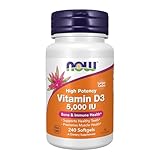
NOW Foods Vitamin D3 5000 IU
5,000 IU × 1 serving = 5,000 IU/day
Check price on Amazon → -
125%of UL
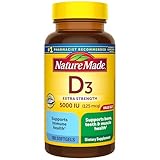
Nature Made Vitamin D3 5000 IU
5,000 IU × 1 serving = 5,000 IU/day label states no daily maximum — shown at one serving
Check price on Amazon → -
125%of UL
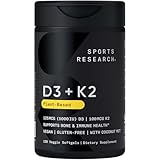
Sports Research Vitamin D3 + K2 (5000 IU + 100mcg MK-7)
5,000 IU × 1 serving = 5,000 IU/day
Check price on Amazon →
Label and ceiling agree
If you are supplementing without a recent blood test, these are the strengths that stay inside the limit on their own.
-
75%of UL
Thorne Vitamin D3 + K2 Liquid
1,000 IU × 3 servings = 3,000 IU/day
Check price on Amazon → -
50%of UL
Nature Made Vitamin D3 2000 IU
2,000 IU × 1 serving = 2,000 IU/day
Check price on Amazon → -
25%of UL
Nordic Naturals Vitamin D3 1000 IU
1,000 IU × 1 serving = 1,000 IU/day
Check price on Amazon → -
25%of UL
Garden of Life Organics Vegan D3 Spray (1000 IU)
1,000 IU × 1 serving = 1,000 IU/day
Check price on Amazon →


How we checked. NIH ODS: 4,000 IU/day vitamin D, adults 19+. We matched 5 of 7 products to a label filed with NIH's DSLD by brand and declared dose, found 1 matching a label the manufacturer has since withdrawn. Where a match is weaker than exact we label it in the card rather than dropping the product. Labels retrieved 2026-08-11. Product images via the Amazon Associates API.
Verification record
How this was checked, and what it can't tell you
- Primary source
- NIH Dietary Supplement Label Database, v9 — the labels manufacturers file with the US government. Public domain.
- Retrieved
- , directly from the DSLD API
- Products checked
- 7 in scope · 5 matched exactly · 1 dose-only, unconfirmed · 1 matched a withdrawn label
- Match rule
- accepted only when the label's declared elemental dose equals the catalog dose within 2%, and the brand string agrees. Weaker matches are published with their weaker status rather than silently upgraded.
- Human or machine
- Every figure is read from a filed label or computed from it — none is estimated, inferred, or produced by a language model, and the DSLD record id is printed beside each product so any number can be traced to its source. The surrounding writing is drafted and edited by a human with AI assistance; the figures it describes are not.
- Check it yourself
- The full reconciliation is published as an open dataset — /api/v1/label-verification.json (CC BY 4.0). Every row carries its DSLD id and a link to the filed label, so our arithmetic can be re-run against the same public source.
What this method cannot establish
- A filed label is not a chemical assay. This shows what the manufacturer declared, not what independent testing of the softgel would find.
- DSLD labels carry an entry date and can lag the product currently on the shelf. We print the vintage of every label and flag any the manufacturer has withdrawn.
- The 4,000 IU limit is the NIH figure for unmonitored daily intake. The Endocrine Society set a higher ceiling in 2011 and stepped back from routine supplementation above the recommended amount in 2024, and a clinician correcting a documented deficiency may deliberately exceed both.
- Exceeding the upper intake level is not the same as toxicity. Vitamin D toxicity is rare and typically requires sustained intake far above these figures.
- This is a data reconciliation, not medical advice, and it has not been reviewed by a licensed clinician.
Best vitamin D3 to hit your dose
All of these are D3 (cholecalciferol), the form that raises blood levels most reliably. They are ordered by cost per day at the dose each one is for — which is not the same as cost per IU. If you only care about IU per dollar, the 5,000 IU bottles win easily; we do not lead with them because most readers should not be taking 5,000 IU.
USP-verified. The default if you have not been tested or your level is adequate.
USP-verified. The correction dose for a level under 12 ng/mL — pair with K2, and retest in 8–12 weeks.
5,000 IU D3 with 100mcg MK-7 in one softgel. Above the 4,000 IU ceiling, so treat it as a supervised correction course rather than a daily default.
Compare all seven verified picks on the best vitamin D ranking.
When to add vitamin K2
Vitamin D increases calcium absorption from your gut. Vitamin K2 (specifically the MK-7 form) activates proteins that direct calcium to your bones rather than your arteries. According to a 2025 review published in the International Journal of Molecular Sciences by D'Elia et al. (PMID: 41516172), high-dose D + K2 has therapeutic potential in selected patient subgroups, though the same review calls it a low-potency modulator rather than a proven treatment. See our full D3 + K2 guide for detailed dosing.
| D3 Dose | Add K2? | Recommended K2 Dose |
|---|---|---|
| Under 4,000 IU/day | Optional | — |
| 4,000–5,000 IU/day | Recommended | 100–200 mcg MK-7 |
| Above 5,000 IU/day | Yes | 200 mcg MK-7 |
Many D3 supplements now include K2 as a combo product — convenient and often cheaper than buying separately. For example, Sports Research Vitamin D3 + K2 (5000 IU + 100mcg MK-7) $0.33/day.
Safety, and who should not follow this page
Talk to a doctor before supplementing at all if any of these apply
Vitamin D raises calcium absorption, so in a handful of conditions a normal dose is not a normal dose. This page is written for generally healthy adults and is not for you if you have:
- Sarcoidosis, tuberculosis, or another granulomatous disease — these can convert vitamin D to its active form unchecked, and ordinary doses can push blood calcium too high
- Hyperparathyroidism, or a history of high blood calcium
- Kidney disease or a history of calcium kidney stones
- Some lymphomas
- You are taking digoxin or a thiazide diuretic, both of which interact with calcium levels
Medicines that change how much you need
- Orlistat, and other fat-blocking weight-loss drugs — vitamin D is fat-soluble, so blocking fat absorption blocks some of it too
- Seizure medicines such as phenytoin, carbamazepine and phenobarbital, and the TB drug rifampin — these speed up the enzymes that break vitamin D down
- Steroids such as prednisone, taken long term
- Cholestyramine and similar bile-acid binders
- After weight-loss surgery, absorption changes enough that dosing should be set by your clinical team, not by a web page
- GLP-1 medicines — see the FAQ below; the concern is reduced intake rather than blocked absorption
Toxicity
- NIH Tolerable Upper Limit: 4,000 IU/day for adults
- Endocrine Society (2011): set its tolerable upper limit at 10,000 IU/day for adults
- Endocrine Society (2024): now suggests against routinely supplementing above the recommended amount in healthy adults under 75 who are not being tested, and against routine blood testing outside established medical reasons (PMID: 38828931)
- Toxicity threshold: blood levels above 150 ng/mL (375 nmol/L). Reaching that usually takes sustained intake well above 10,000 IU a day for months — most documented cases involve 40,000 IU a day or more, or a manufacturing error.
- Toxicity symptoms: Nausea, vomiting, weakness, confusion, kidney stones. Caused by hypercalcemia (too much calcium in blood).
- Practical risk: low across the doses sold, but 5,000 IU is above the 4,000 IU ceiling and is a correction course, not a maintenance dose. If you take 4,000+ IU, get tested.
Questions people actually ask
Did the big trials prove vitamin D doesn't work?
No — they proved it doesn't work for people who already have enough. Two 2026 papers took the two largest trials and re-ran them against a UK Biobank population, sorted by starting blood level. Weighted to the people the trials actually enrolled, the result was null: hazard ratios of 0.97 and 1.02 for dying during the study. But restricted to people who were insufficient, it was 0.85 and 0.81; restricted to people who were deficient, 0.79 and 0.75. The authors' own conclusion is that null effects "were to be expected in trials conducted in vitamin D sufficient populations" (PMID: 41719624).
How accurate is a vitamin D blood test?
Less accurate than the single number suggests. In 2025, researchers compared 13 immunoassays and two mass-spectrometry methods, each run in two labs. Mass spectrometry hit every accuracy target. But only a little over half of the other assays met the 10% uncertainty threshold, and four missed even the 15% limit (PMID: 40785082). In practice a reported 29 ng/mL could be roughly 25–33. That range straddles the line between "insufficient" and "fine", which is why a single borderline result is a reason to retest rather than to act.
I'm on a GLP-1 medication. Does that change my vitamin D?
Possibly, and it is worth asking your prescriber about. These drugs combine reduced food intake, lower dietary variety, delayed gastric emptying and rapid weight loss. A 2026 review of micronutrient risk names vitamin D among the most relevant signals (PMID: 42382663). Most reported abnormalities are subclinical, and the review calls for monitoring rather than blanket supplementing — so the useful step is a blood test, not a bigger bottle.
Is it possible to take too much?
Yes, and it is now more common than it used to be. The share of Americans above 125 nmol/L (50 ng/mL) — the level NIH flags as "may be of concern" — rose from under 1% to 8.06% between 2001 and 2023, and reached 16.2% among supplement users (PMID: 42163863). That is not the same as toxicity, which remains rare. It does mean the old assumption that more is harmlessly better no longer matches the population.
Should I take D3 or D2?
The IU number is the same either way — "vitamin D" on a label almost always means D3 (cholecalciferol), so the doses above apply unchanged. What the D3 wording does change is which product to buy: D2 (ergocalciferol) produces about 40% less of a rise in total 25(OH)D than D3 does, a difference of 10.4 nmol/L across 12 daily-dosing comparisons (PMID 37865222), so a dose labelled in D2 is not equivalent. D2 is normally the prescription-only 50,000 IU weekly form; if a bottle does not name its form, check the Supplement Facts panel for cholecalciferol.
How much will 1,000 IU of vitamin D3 raise my blood level?
Less than most sources claim. Heaney's dosing study found a slope of about 0.70 nmol/L for each extra microgram, and 1,000 IU is 25 mcg — so roughly 7 ng/mL (PMID: 12499343). The larger observational dataset behind our calculator is lower still, about 4.8 ng/mL for the first 1,000 IU (PMID: 25372709). The widely repeated "1 ng/mL per 100 IU" is optimistic against both. The response is not linear: it is larger when you start out deficient and smaller at higher blood levels or higher body weight, so heavier adults often need more per unit. This is why testing and retesting beats guessing (Heaney et al., 2003).
One default to remember: for maintenance, Nature Made Vitamin D3 2000 IU $0.05/day. Correction doses above 4,000 IU are a supervised course rather than a default, so we are not putting one here — see what to do at your level first.
Related guides
- Vitamin D side effects and toxicity — what too much looks like, the 4,000 IU UL, and what the shelf sells above it
- Vitamin D2 vs D3 — why D2 produces about 40% less of a rise
- Deficiency Signs & Testing — How to know if you need it
- Best Vitamin D Supplement — 7 products ranked by cost and quality
- Vitamin D with K2 — Full guide on when and how to add K2
- Vitamin D for Immunity — Evidence from 120 trials on infection prevention
- How Much Vitamin D for Seniors? — Why the RDA barely moves at 71+
- Vitamin D for Women — Pregnancy, breastfeeding and menopause dosing, and what prenatal labels actually carry
- Best Time to Take Vitamin D — Morning vs night, and the food-timing evidence
- How Long Does Vitamin D Take to Work? — The lab-value timeline by starting level
- All Vitamin D Guides
- Magnesium Dosage Guide — If supplementing both; magnesium is needed for vitamin D activation
- Calcium Citrate vs Carbonate — Vitamin D enhances calcium absorption; choose the right calcium form
Sources
Every study below was retrieved from the Europe PMC API and read in full before it was cited. Where a paper's conclusion is contested, we say so in the text rather than picking the version that suits us.
- Demay MB, et al. "Vitamin D for the Prevention of Disease: An Endocrine Society Clinical Practice Guideline." J Clin Endocrinol Metab. 2024. PMID: 38828931
- Wang Y, Sha S, Gwenzi T, Schöttker B, Brenner H. "Impact of vitamin D supplementation on all-cause mortality: Randomized trials revisited." Clinical Nutrition. 2026. PMID: 41719624
- Wang Y, Sha S, Gwenzi T, Schöttker B, Brenner H. "Effect of vitamin D supplementation on cardiovascular outcomes: randomized trials revisited." European Journal of Epidemiology. 2026. PMID: 42484779
- "Revisiting the Role of Vitamin D in Fracture Prevention in the Era of Mega-Trials." Endocrinology and Metabolism (Seoul). 2026. PMID: 42114835
- "Beyond a Universal Threshold: Reconsidering the Clinical Meaning of Vitamin D Insufficiency." Endocrinology and Metabolism (Seoul). 2026. PMID: 42114836
- "From the Vitamin D Paradox to Precision Nutrition: Targeted Supplementation, Assay Pitfalls, and Clinical Decision-Making." Current Nutrition Reports. 2026. PMID: 42397501
- "Assessment of measurement uncertainty of immunoassays and LC-MS/MS methods for serum 25-hydroxyvitamin D." Clinical Chemistry and Laboratory Medicine. 2025. PMID: 40785082
- "The Prevalence of Nutritional Imbalances in the US Population Over Time: NHANES 1999–2023." Current Developments in Nutrition. 2026. PMID: 42163863
- Ekwaru JP, et al. "The importance of body weight for the dose response relationship of oral vitamin D supplementation and serum 25-hydroxyvitamin D in healthy volunteers." PLoS ONE. 2014. PMID: 25372709
- Zittermann A, et al. "Vitamin D supplementation, body weight and human serum 25-hydroxyvitamin D response: a systematic review." European Journal of Nutrition. 2014. PMID: 24292820
- Gallagher JC, et al. "Dose response to vitamin D supplementation in postmenopausal women: a randomized trial." Annals of Internal Medicine. 2012. PMID: 22431675
- Dawson-Hughes B, et al. "Meal conditions affect the absorption of supplemental vitamin D3 but not the plasma 25-hydroxyvitamin D response to supplementation." J Bone Miner Res. 2013. PMID: 23427007
- Uwitonze AM, Razzaque MS. "Role of Magnesium in Vitamin D Activation and Function." J Am Osteopath Assoc. 2018. PMID: 29480918
- "Micronutrient risk with GLP-1 receptor and dual incretin agonists in obesity." Obesity Pillars. 2026. PMID: 42382663
- Wang L, et al. "Role of Vitamin D in Prevention of Acute Respiratory Infections in Pediatric Populations." BMC Pediatrics. 2025. PMID: 41387808
- D'Elia S, et al. "Modulation of Cardiometabolic Risk by Vitamin D and K2." Int J Mol Sci. 2025. PMID: 41516172
- Heaney RP, et al. "Human serum 25-hydroxycholecalciferol response to extended oral dosing with cholecalciferol." Am J Clin Nutr. 2003. PMID: 12499343
- Holick MF, Binkley NC, Bischoff-Ferrari HA, et al. "Evaluation, treatment, and prevention of vitamin D deficiency: an Endocrine Society clinical practice guideline." J Clin Endocrinol Metab. 2011. PMID: 21646368
- Shieh A, Ma C, Chun RF, et al. "Effects of Cholecalciferol vs Calcifediol on Total and Free 25-Hydroxyvitamin D and Parathyroid Hormone." J Clin Endocrinol Metab. 2017. PMID: 28187226
- Pérez-Castrillón JL, Dueñas-Laita A, Brandi ML, et al. "Calcifediol is superior to cholecalciferol in improving vitamin D status in postmenopausal women: a randomized trial." J Bone Miner Res. 2021. PMID: 34101900
- NIH Office of Dietary Supplements. "Vitamin D: Fact Sheet for Health Professionals." ods.od.nih.gov
- NIH Dietary Supplement Label Database (DSLD) v9 — the label corpus behind the Verified Supplement Data label study. dsld.od.nih.gov