Alpha-Lipoic Acid: Why "600 mg" Is Really 300 mg of Active R
Educational overview — not medical advice. ALA can lower blood sugar; if you take insulin or a sulfonylurea, or have a thyroid/autoimmune history, see does it work for the safety cautions.
Alpha-lipoic acid comes in two mirror-image forms — and only the R-(+) one is the active, body-made form. Most products are racemic (50/50 R/S), so a labeled "600 mg" cap = ~300 mg active R. The obvious move is "buy R-ALA instead" — but the data says the opposite on value: priced per mg of actual active R, bulk racemic is the cheapest source of R ($0.03/100 mg R), while premium R-ALA / stabilized sodium-R-lipoate costs ~6× more per mg of R. R-ALA's genuine edge is absorption, not cost (Carlson 2007). The evidence is real but specific: diabetic neuropathy (IV > oral), a split glycemic signal, a small weight effect.
As an Amazon Associate we earn from qualifying purchases. Ranked by cost per 100 mg of active R-ALA, never commissions.
Start here
What alpha-lipoic acid is (and what "active" means here)
ALA is a sulfur-containing compound your body makes in small amounts and uses as an antioxidant and a cofactor in mitochondrial energy metabolism. The supplement wrinkle is chirality: ALA exists as two non-superimposable mirror-image forms, R-(+) and S-(−), and only the R-(+) enantiomer is the one the body synthesizes and the biologically active form (Salehi 2019). Manufacturing plain ALA yields a racemic 50/50 mix, so the first thing to know about any "alpha-lipoic acid" bottle is that half of a racemic dose is the inactive S form — a labeled 600 mg supplies about 300 mg of active R.
The moat, honestly: R is active, but racemic is the cheaper source of it
Here's where most write-ups go wrong. Because only R is active, the naive advice is "skip racemic, buy R-ALA." But when you compute cost per mg of the actual active R across products, the ranking flips: bulk racemic is the cheapest source of active R, because it's manufactured at scale and sold in large counts, so even paying for the "wasted" S half, its active-R cost is the lowest of the field. Premium R-ALA and stabilized sodium-R-lipoate (Na-R-ALA) cost roughly 6× more per mg of R. So R-ALA's real advantage isn't "more active per dollar" — it's absorption: stabilized sodium-R-lipoate reaches higher peak plasma levels (Cmax/AUC) than plain racemic ALA in human pharmacokinetic testing (Carlson 2007 — a small, non-MEDLINE-journal study; we cite it for absorption only). See R vs racemic for the full breakdown, including the "R-ALA Complex" label that sounds like R-ALA but is mostly racemic.
The one-line takeaway Only R-(+)-lipoic acid is active, so a racemic "600 mg" is ~300 mg of active R — but priced per mg of that active R, bulk racemic is the cheapest source ($0.03/100 mg R), and R-ALA/Na-R-ALA cost more per mg of R. You're buying absorption with R-ALA, not more active. Of the 13 products we track, 8 are racemic, 4 are genuine R-form, and 1 is a mostly-racemic "R" blend.
Does it work? (the short version)
Modestly and specifically. Diabetic neuropathy: the strongest result is intravenous — 600 mg/day IV for 3 weeks improved symptoms ~24% (Ziegler 2004); oral is favorable and dose-related (Hsieh 2023), but a 2024 Cochrane review found oral ALA over ≥6 months has little or no durable effect (Baicus 2024) — so IV > oral. Blood sugar: positive across metabolic-disease populations (Akbari 2018) but null in uncomplicated type 2 diabetes (Ebada 2019) — not a glucose-drug substitute. Weight: small, ~−0.69 kg (Namazi 2018). And there are real safety landmines — additive hypoglycemia with antidiabetic drugs, and reported insulin-autoimmune (Hirata) cases — on the evidence page.
On this page
Alpha-Lipoic Acid Benefits: Graded by Evidence
Looking for a tested product? See our best alpha-lipoic acid ranked by cost per 100mg of active R →
Tier 1: diabetic peripheral neuropathy — the best-evidenced benefit, but route changes the answer
This is where ALA's data is strongest, and also where the fine print matters most. A meta-analysis pooling four randomized, placebo-controlled trials — ALADIN, ALADIN III, SYDNEY, and NATHAN II, totaling 1,258 patients — found that 600 mg/day of ALA given intravenously for three weeks improved total neuropathy symptom scores by 24.1% versus placebo, with 52.7% of treated patients seeing at least a 50% improvement versus 36.9% on placebo (Ziegler 2004, PMID: 14984445). That's a real, meaningful effect — but it's a hospital IV drip, not the oral capsule sold as a supplement.
Oral ALA also has supportive evidence: a 2023 meta-analysis of 10 randomized trials (1,242 patients) using 600, 1,200, or 1,800 mg/day found a dose-related improvement in symptom scores and patient-reported satisfaction (Hsieh 2023, PMID: 37630823). But a 2024 Cochrane review that specifically restricted its analysis to trials lasting six months or longer — almost all oral — concluded ALA "probably has little or no effect on neuropathy symptoms or adverse events at six months," with a confidence interval that didn't reach the threshold for a clinically meaningful difference (Baicus 2024, PMID: 38205823). Put together: the IV result is real, the short-term oral result is favorable but weaker, and the long-term oral result is disappointing. If you're buying an oral supplement expecting the 24% IV figure, you're likely to be let down. See our full does-it-work breakdown for the complete route-by-route evidence table.
Tier 2: glycemic markers and weight — real, but modest and inconsistent
For blood sugar, the picture is split. A meta-analysis of 24 randomized trials across people with various metabolic diseases found ALA significantly reduced fasting glucose (standardized mean difference −0.54) and HbA1c (−1.22) (Akbari 2018, PMID: 29990473). But a separate meta-analysis of 10 studies (553 patients) restricted to people with uncomplicated type 2 diabetes found no significant effect on either fasting glucose or HbA1c (Ebada 2019, PMID: 32184879). The likely explanation is that the positive result is driven by broader, sicker metabolic-disease populations with more room to improve — not a general glucose-lowering effect you should expect if your diabetes is otherwise well controlled. It is not a substitute for diabetes medication.
For weight, a meta-analysis of 12 trials found ALA supplementation reduced body weight by 0.69 kg and BMI by 0.38, with no significant change in waist circumference (Namazi 2018, PMID: 28629898). That's roughly a pound and a half — a statistically real effect, but not a weight-loss result by any practical measure.
The buying signals: R-ALA vs racemic, and taking it on an empty stomach
Two practical questions come up constantly when shopping for ALA, and both have a dedicated page with the full breakdown — here's the headline version. First, only the R-(+) enantiomer is the form your body actually makes and uses; most commercial ALA is racemic, a 50/50 mix of R and the largely inactive S form, so a labeled "600 mg" delivers about 300 mg of active R (Salehi 2019, PMID: 31405030). A stabilized sodium-R-lipoate form reaches higher peak and total blood levels than plain racemic ALA in a small human pharmacokinetic study (n=12) (Carlson 2007, PMID: 18069903) — but priced per milligram of actual active R, bulk racemic is still the cheaper source; see R vs racemic for the full cost comparison.
Second, ALA is usually taken on an empty stomach, about 30 minutes before a meal. That advice traces back to a small human pharmacokinetic study that found taking it with food measurably lowered both peak and total blood levels compared to taking it fasted (Gleiter 1996, PMID: 8858282). It's a short, older study rather than a large modern trial, but it's the basis for the timing convention used across most ALA products and the oral trials above. See our dosage guide for the full 600 mg/day protocol.
Safety notes that affect who should chase these benefits
Two cautions are worth knowing before you buy ALA for any of the benefits above, beyond the general hypoglycemia risk with insulin or sulfonylureas covered on our does-it-work page.
Other marketed claims: antioxidant, skin, and cognitive support
ALA is often sold as a general antioxidant, a skin or "anti-aging" ingredient, and occasionally for cognitive support. The biological rationale — ALA is a genuine mitochondrial cofactor and has antioxidant activity in cell and animal models — is real, but we did not find a meta-analysis quantifying a human effect size for skin appearance or cognition the way there is for neuropathy, glucose, or weight. Treat those claims as plausible extrapolation from mechanism, not as benefits with trial-backed numbers behind them, and don't expect them to be graded here alongside the tiers above.
Alpha-lipoic acid benefits at a glance
| Benefit | Evidence tier | What the trials found | Verdict |
|---|---|---|---|
| Diabetic neuropathy (IV) | Tier 1 — best evidenced | TSS +24.1% vs placebo, 600mg/day IV × 3wk (4 pooled trials, n=1,258) | Real, meaningful — but this is the IV data |
| Diabetic neuropathy (oral) | Tier 2 | Favorable, dose-related (10 RCTs); little durable effect ≥6 months per Cochrane | Modest — the capsule most people buy is the weaker evidence |
| Glycemic markers | Tier 2 | Positive in broad metabolic disease (24 RCTs); null in uncomplicated T2D (10 studies) | Split — not a glucose-drug substitute |
| Body weight | Tier 2/3 | −0.69kg, BMI −0.38 (12 trials); waist circumference not significant | Small — about a pound and a half |
| Antioxidant / skin / cognitive claims | Tier 3 — thin | No meta-analysis quantifying a human effect size found | Mechanistic extrapolation, not proven |
Does Alpha-Lipoic Acid Work? The Honest Evidence (IV > Oral)
The mechanism, and why the route of delivery is on every line
Alpha-lipoic acid is an antioxidant and a mitochondrial cofactor, and only the R-(+) enantiomer is the body-made, active form (Salehi 2019); trials used racemic ALA at the standard 600 mg/day. The single most important honest caveat isn't the dose — it's intravenous vs oral. The headline neuropathy result was achieved with an IV drip in a hospital, and oral capsules are absorbed less reliably. So the table below flags the route for every result, because the strong IV finding does not automatically transfer to the oral capsule you buy off a shelf — conflating them is the most common way ALA's evidence gets oversold.
What the trials show — by outcome and route
| Outcome | Route | Finding | The honest limit |
|---|---|---|---|
| Diabetic neuropathy Ziegler 2004 | IV | TSS +24.1%, NIS-LL +16% (600 mg/day IV, 3 wk, n=1,258) | This is intravenous. The strongest result — but it's a hospital drip, not the oral cap |
| Diabetic neuropathy Hsieh 2023 | Oral | Favorable, dose-related (10 RCTs) | Positive direction — but read against the long-term Cochrane null below |
| Diabetic neuropathy (≥6 mo) Baicus 2024 (Cochrane) | Oral | Little or no durable effect on symptoms | The honest long-term caveat: IV > oral. Don't expect the IV result from a capsule |
| Glycemic control Akbari 2018 | Oral | FPG −0.54, HbA1c −1.22 (SMD; 24 RCTs, metabolic disease) | Positive in broad metabolic populations — pair with the null below |
| Glycemic control Ebada 2019 | Oral | No significant FPG or HbA1c effect | Null in uncomplicated T2D. Not a glucose-drug substitute |
| Body weight Namazi 2018 | Oral | Weight −0.69 kg, BMI −0.38 | Small — roughly a pound or two, not a weight-loss treatment |
Read together: the ALA case is modest and route-dependent — a strong intravenous neuropathy result that the oral capsule only partly reproduces (and Cochrane finds little durable oral effect), a split glycemic signal that's positive in broad metabolic disease but null in uncomplicated T2D, and a small weight effect. It's a reasonable adjunct for diabetic nerve symptoms, not a glucose or weight-loss drug. (A separate dose-response meta-analysis, Vajdi 2020, estimated a larger weight drop of ~−2.29 kg but no significant waist change — still a modest effect.)
Safety landmines worth respecting
ALA is generally well tolerated (mild GI, occasional rash), but two cautions are genuine "monitor and discuss with your clinician" issues:
Who it's most reasonable for
- People with diabetic nerve symptoms wanting an adjunct — understanding the strong evidence is intravenous, and the oral capsule's durable effect is modest at best (Baicus 2024).
- Not a substitute for diabetes medication, and not a reliable glucose-lowering or weight-loss drug.
- Get medical advice first if you take insulin or a sulfonylurea (additive hypoglycemia), have a thyroid or autoimmune history or East Asian ancestry (insulin autoimmune syndrome risk), or are pregnant or breastfeeding.
Alpha-Lipoic Acid Side Effects: GI Upset, Hypoglycemia & IAS
Looking for a tested product? See our best alpha-lipoic acid ranked by cost per 100mg of active R, which also links back to this safety detail →
Day-to-day tolerability: mild GI upset, and a smell that surprises people
Across the oral trials behind ALA's diabetic-neuropathy evidence, the compound has a consistent reputation: well tolerated. The DEKAN trial, an 800 mg/day oral dose for four months, reported no difference between ALA and placebo in the rates of adverse events (Ziegler 1997, PMID: 9051389). The 2024 Cochrane review pooling three long-term trials (1,090 participants) found little or no difference between ALA and placebo in adverse events leading to treatment discontinuation within six months (Baicus 2024, PMID: 38205823). None of that means side effects are zero — the complaints that do come up are mostly mild nausea, stomach discomfort, or heartburn, more likely early in use or with a larger single dose rather than a split one.
A second, more distinctive complaint isn't captured well in trial adverse-event tables at all: a sulfurous, faintly rotten-egg smell to burps, which some people notice within the first days of use. It follows directly from ALA's chemical structure — a five-membered ring built around a pair of sulfur atoms — and it's harmless, just unexpected if nobody warns you about it. If GI upset does bother you, taking ALA with food reduces it, though that comes at a real cost to absorption; see our dosage guide for the usual empty-stomach timing and the trade-off.
The safety issue that actually matters: hypoglycemia with diabetes medication
ALA lowers blood glucose on its own — and most people taking it are already on a glucose-lowering drug. A meta-analysis of 24 randomized trials found ALA significantly reduced fasting glucose and HbA1c in people with metabolic disease (Akbari 2018, PMID: 29990473). That's a modest effect on its own, but ALA's strongest use case is diabetic peripheral neuropathy, so the people reaching for it are disproportionately already managing diabetes with insulin or an oral medication. Layering ALA's own glucose-lowering effect on top of insulin or a sulfonylurea (glipizide, glimepiride, glyburide) can add up to hypoglycemia — not a rare drug-interaction edge case here, but the default scenario for this supplement's typical user.
This is a mechanism-based caution rather than a dedicated interaction trial, but it's a real one: if you take insulin or a sulfonylurea, monitor your blood sugar more closely when starting ALA and coordinate any dose changes with your doctor rather than adjusting on your own.
Insulin autoimmune syndrome (Hirata disease): rare, but worth knowing by name
This is the side effect that gets the most attention relative to how often it actually happens, so it's worth being precise. Insulin autoimmune syndrome (IAS), also called Hirata disease, is a condition where the body produces antibodies against its own insulin, causing spontaneous hypoglycemia with unusually high measured insulin levels. It was first linked to ALA in Japan — an early case report described the association in a Japanese patient (Ishida 2007, PMID: 17586737) — and a strong genetic predisposition underlies it: the HLA-DRB1*04:06 variant in Japanese patients, and a related but distinct variant, HLA-DRB1*04:03, in the small number of European cases reported since. One Italian case series described six Caucasian patients who developed IAS after taking 600 mg/day of ALA, five carrying HLA-DRB1*04:03 and one carrying HLA-DRB1*04:06 (Gullo 2014, PMID: 24111525); a second report described two more European cases, both HLA-DRB1*04:03 (Moffa 2019, PMID: 30086435).
Those are case reports, not a population-level risk estimate — eight documented European cases is not the same as "this happens to European ALA users." For the actual population picture, Europe's food safety authority reviewed the published evidence, including 49 case reports of ALA-associated IAS in total, and found that symptoms resolved within weeks to months once ALA was stopped in every case reviewed. Separately, it cites an estimate that the overall incidence of IAS in Japan (from any cause, not ALA specifically) was about 0.017 cases per 100,000 people in 2017–2018, and states that Europe's incidence is likely even lower — while also concluding that the specific risk attributable to ALA "cannot be quantified precisely" from the available data (EFSA Panel on Nutrition 2021, PMID: 34122657). Put plainly: this is a genuinely rare reaction with a real biological mechanism and a known genetic risk group, not a common outcome you should expect. If you develop unexplained hypoglycemia while taking ALA — shakiness, confusion, sweating, without a clear cause — stop taking it and see a clinician; the condition is treatable and typically resolves once ALA is discontinued.
Two more interactions worth knowing: biotin and thiamine
- Biotin (shared transporter, not demonstrated deficiency). Researchers identified the transporter that carries the active R-(+) form of ALA into cells — the human Na+/multivitamin transporter, hSMVT — which is the same transporter known to carry biotin and pantothenic acid (Zehnpfennig 2015, PMID: 25971966). That's a mechanistic finding from a cell/transporter-based study, not a clinical trial showing ALA supplementation causes biotin deficiency in people. It's a reasonable reason not to stack a high-dose biotin supplement with high-dose ALA at the exact same time, not a reason to avoid the combination altogether.
- Thiamine (correct any deficiency first). ALA and thiamine (vitamin B1) both function in the same metabolic pathway, the pyruvate dehydrogenase complex. Standard clinical guidance — most relevant for people with poor nutrition or heavy alcohol use, where thiamine deficiency is more likely — is to identify and correct thiamine deficiency before or alongside starting ALA rather than layering it on top of an unaddressed deficiency. This is a mechanism-based precaution we did not find quantified in a dedicated human trial, so treat it as sensible practice rather than a documented risk with a number attached.
Alpha-lipoic acid side effects at a glance
| Effect | How common per our sources | What to do | When it matters |
|---|---|---|---|
| GI upset (nausea, stomach discomfort) | Reported, but not significantly more than placebo in controlled trials at 600–800mg/day | Split the dose or take with food if needed; ramp up gradually | Always — the default early-use complaint |
| Sulfurous odor to burps/breath | Widely reported anecdotally; not systematically quantified in trial data | No action needed — harmless | Cosmetic only, tends to fade with continued use |
| Hypoglycemia (added to insulin/sulfonylureas) | Mechanism-based: ALA measurably lowers glucose on its own | Monitor blood sugar closely; coordinate with your clinician | Common overlap — most ALA users are already on diabetes medication |
| Insulin autoimmune syndrome (Hirata disease) | Rare: 49 case reports reviewed by EFSA; Japan's overall IAS incidence ~0.017/100,000 (2017–18) | Stop ALA and see a clinician if unexplained hypoglycemia develops; resolves after discontinuation | Genuinely rare, but the one reaction worth knowing by name |
| Biotin transporter competition | Lab/mechanistic finding only (shared hSMVT transporter) | Avoid mega-dosing biotin and ALA at the exact same time if being cautious | Theoretical — not shown to cause biotin deficiency in people |
| Thiamine depletion risk | Mechanism-based caution (shared metabolic pathway); no dedicated trial data | Correct any known thiamine deficiency before/while starting ALA | Mainly relevant with poor nutrition or heavy alcohol use |
Verification check · Alpha-Lipoic Acid (ALA)
What we could and could not verify about Alpha-Lipoic Acid (ALA)
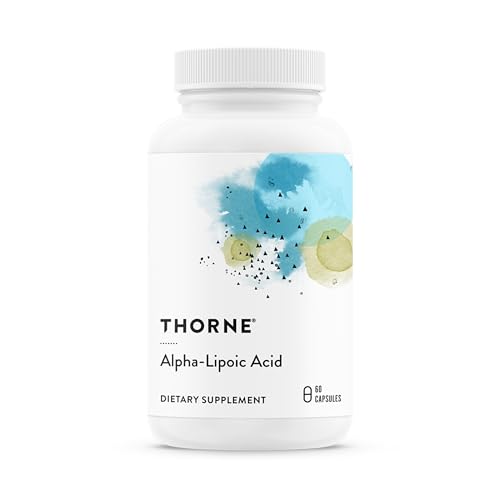
1 of the 13 are confirmed in NSF/ANSI 173 — Thorne Alpha-Lipoic Acid 300 mg (60 Caps). The other 12Alpha-Lipoic Acid (ALA) products we track are simply not listed, which is an absence of independent confirmation and not evidence against them.
Method: our Alpha-Lipoic Acid (ALA) roster matched against the full public registries of third-party-certified supplements in the US — NSF/ANSI 173, USP Verified and Informed Sport, 5,317 listings, retrieved 2026-08-25. Absence means nobody independent has checked that Alpha-Lipoic Acid (ALA) product, not that it failed. Full method and limitations.
Frequently asked questions
What is alpha-lipoic acid?
A body-made antioxidant and energy-metabolism cofactor. It has two mirror-image forms; only R-(+) is active. Most products are racemic (50/50 R/S), so a "600 mg" cap = ~300 mg active R. Standard studied dose 600 mg/day.
Is R-ALA better than racemic?
Not for value. Priced per mg of active R, bulk racemic is the cheapest source (~$0.03/100 mg R); R-ALA costs ~6× more per mg of R. R-ALA's edge is absorption (Carlson 2007), not more active per dollar.
Does it work?
Specifically. Neuropathy: IV strong (Ziegler 2004), oral weaker and null long-term (Baicus 2024 Cochrane). Glycemic split: positive in metabolic disease (Akbari 2018), null in uncomplicated T2D (Ebada 2019). Weight small (Namazi 2018).
How much should I take?
600 mg/day is the standard studied oral dose (range 300–1,800; trials used racemic). 600 mg racemic = ~300 mg active R. Cautions: additive hypoglycemia with insulin/sulfonylureas; reported insulin-autoimmune cases at ~600 mg/day.
What are alpha-lipoic acid's best-evidenced benefits?
By a wide margin, diabetic peripheral neuropathy. A meta-analysis pooling four randomized trials (ALADIN I, ALADIN III, SYDNEY, and NATHAN II; n=1,258) found that 600mg a day given intravenously for three weeks improved neuropathy symptom scores by about 24% versus placebo. That's the strongest result in the ALA literature, but it's an IV finding, not the oral capsule most people buy. Behind that, ALA has real but smaller effects on glycemic markers and body weight, and it's often taken for a claimed antioxidant or 'anti-aging' benefit that doesn't have comparable human trial data behind it.
Does alpha-lipoic acid help with diabetic nerve pain (neuropathy)?
Yes, but how much depends heavily on the route. The strongest evidence is intravenous: pooling the ALADIN, SYDNEY, and NATHAN II trials, 600mg/day IV for three weeks improved total symptom scores by about 24% and reduced neuropathy impairment scores by about 16%. Oral ALA also looks favorable and dose-related in a separate meta-analysis of 10 trials at 600-1,800mg/day, but a 2024 Cochrane review of trials lasting six months or more concluded that oral ALA probably has little or no meaningful effect on neuropathy symptoms. So the honest read is that intravenous outperforms oral, and if you're taking an oral capsule, expect a more modest and less certain effect than the headline 24% figure.
Does alpha-lipoic acid help with blood sugar or weight loss?
Both effects are real but modest, and the blood sugar signal is inconsistent. A meta-analysis of 24 trials in people with various metabolic diseases found ALA meaningfully lowered fasting glucose and HbA1c. But a separate meta-analysis focused specifically on people with uncomplicated type 2 diabetes found no significant effect on either measure. For weight, a meta-analysis of 12 trials found a small reduction of about 0.69kg and a BMI drop of 0.38, with no significant change in waist circumference. Neither effect is large enough to treat ALA as a glucose-lowering or weight-loss product on its own.
What should I know about R-ALA, timing, and safety before buying for these benefits?
Three practical points. First, only the R-(+) enantiomer of ALA is biologically active; most products are racemic (50/50 R/S), and a stabilized sodium-R-lipoate form reaches higher blood levels in human testing, though bulk racemic is actually the cheaper source of active R per dollar. Second, a small pharmacokinetic study found taking ALA with food measurably lowers peak and total blood levels compared to taking it on an empty stomach, which is the basis for the usual advice to take it about 30 minutes before a meal. Third, two safety notes worth knowing: lab research shows ALA competes with biotin for the same intestinal transporter, though this hasn't been shown to cause biotin deficiency in people taking normal doses; and there are rare reported cases of insulin autoimmune syndrome, mostly in people with a specific gene variant, at around 600mg/day.
What are the most common alpha-lipoic acid side effects?
Mild gastrointestinal upset — nausea, stomach discomfort, or heartburn — is what most people notice, especially when starting out or taking a larger single dose. In controlled trials at the standard 600-800mg/day oral dose, rates of adverse events were not significantly different from placebo, and treatment was described as well tolerated. A second, more distinctive but harmless complaint some people report is a sulfurous, faintly rotten-egg smell to their burps, which follows from ALA's sulfur-containing chemical structure. Neither is dangerous, and both tend to be more noticeable early on.
Can alpha-lipoic acid cause low blood sugar (hypoglycemia)?
Yes, and this matters more than the GI upset for most people who actually take ALA. ALA itself measurably lowers blood glucose — a meta-analysis of 24 trials found it significantly reduced fasting glucose and HbA1c in people with metabolic disease. Because ALA's best-evidenced use is diabetic neuropathy, most people taking it are already on insulin or a diabetes medication, so the combination isn't an edge case, it's the norm. Stacking ALA on top of insulin or a sulfonylurea (glipizide, glimepiride, glyburide) can add up to hypoglycemia. If you take one of those medications, monitor your blood sugar and talk to your doctor before adding ALA.
What is insulin autoimmune syndrome, and how worried should I be about it?
It's a rare condition, sometimes called Hirata disease, in which the body makes antibodies against its own insulin, causing spontaneous hypoglycemia. It was first linked to alpha-lipoic acid in Japan, and a strong genetic predisposition is involved — mainly the HLA-DRB1*04:06 gene variant in Japanese patients and HLA-DRB1*04:03 in the small number of European cases reported since (eight total across two case series). Population-level data from Europe's food safety authority, reviewing 49 case reports overall, describes it as genuinely rare and states the precise risk from ALA specifically can't be quantified from available data — this is not a common reaction. Symptoms resolve within weeks to months of stopping ALA. If you develop unexplained hypoglycemia while taking it, stop and see a clinician.
Does alpha-lipoic acid interact with biotin or thiamine?
Two lower-profile points worth knowing. First, lab research identified the transporter that carries R-lipoic acid into cells (hSMVT) as the same one that carries biotin and pantothenic acid, so there's a plausible, mechanism-based reason not to take a very high dose of biotin at the exact same time as ALA — this hasn't been shown to cause biotin deficiency in people at normal doses. Second, ALA and thiamine (vitamin B1) work in the same metabolic pathway (the pyruvate dehydrogenase complex), which is the basis for standard clinical guidance to correct any existing thiamine deficiency — most relevant in people with poor nutrition or heavy alcohol use — before or alongside starting ALA, rather than adding it on top of an unaddressed deficiency.
Related guides
- Milk thistle — another "the active isn't the big number on the label" category (silymarin)
- Berberine — the other popular metabolic/glycemic supplement, with its own bioavailability problem
- NAC — a related sulfur-antioxidant with a genuinely different evidence base
Sources
- Salehi B, et al. "Insights on the Use of α-Lipoic Acid for Therapeutic Purposes." Biomolecules. 2019. PMID: 31405030 (R-(+) is the natural, active enantiomer; commercial ALA is widely racemic; R shows better bioavailability than S).
- Carlson DA, et al. "The plasma pharmacokinetics of R-(+)-lipoic acid administered as sodium R-(+)-lipoate to healthy human subjects." Altern Med Rev. 2007. PMID: 18069903 (higher Cmax/AUC for stabilized sodium-R-lipoate; small human PK study, n=12; non-MEDLINE journal — cited for absorption only).
- Ziegler D, et al. "Treatment of symptomatic diabetic polyneuropathy with the antioxidant α-lipoic acid (SYDNEY 2)." Diabet Med. 2004. PMID: 14984445 (IV 600 mg/day, TSS improved ~24.1%).
- Baicus C, et al. "Alpha-lipoic acid for diabetic peripheral neuropathy." Cochrane Database Syst Rev. 2024. PMID: 38205823 (oral ≥6 months: little or no effect).
- Full product dataset: /alpha-lipoic-acid/cost-by-brand.json (CC BY 4.0).
- Hsieh RY, et al. "Effects of Oral Alpha-Lipoic Acid Treatment on Diabetic Polyneuropathy: A Meta-Analysis and Systematic Review." Nutrients. 2023;15(16):3634. PMID: 37630823 (10 RCTs, n=1,242, oral 600-1,800mg/day; dose-related response).
- Akbari M, et al. "The effects of alpha-lipoic acid supplementation on glucose control and lipid profiles among patients with metabolic diseases: A systematic review and meta-analysis." Metabolism. 2018;87:56-69. PMID: 29990473 (24 RCTs; FPG SMD −0.54, HbA1c SMD −1.22).
- Ebada MA, et al. "Efficacy of Alpha-lipoic Acid in The Management of Diabetes Mellitus: A Systematic Review and Meta-analysis." Iran J Pharm Res. 2019;18(Suppl1):81-92. PMID: 32184879 (10 studies, n=553, uncomplicated T2D; FPG/HbA1c not significant).
- Namazi N, et al. "Alpha-lipoic acid supplement in obesity treatment: A systematic review and meta-analysis of clinical trials." Clin Nutr. 2018;37(2):419-428. PMID: 28629898 (12 trials; weight −0.69kg, BMI −0.38, WC not significant).
- Gleiter CH, et al. "Influence of food intake on the bioavailability of thioctic acid enantiomers." Eur J Clin Pharmacol. 1996;50(6):513-514. PMID: 8858282 (food intake measurably lowered blood levels versus fasted dosing; basis for the empty-stomach convention).
- Zehnpfennig B, et al. "Interaction of alpha-Lipoic Acid with the Human Na+/Multivitamin Transporter (hSMVT)." J Biol Chem. 2015;290(43):25957-25966. PMID: 25971966 (cell/transporter-based study; biotin substantially inhibited R-lipoic acid uptake at the shared transporter).
- Gullo D, et al. "Insulin autoimmune syndrome (Hirata disease) in European Caucasians taking alpha-lipoic acid." Clin Endocrinol (Oxf). 2014;81(2):204-209. PMID: 24111525 (6 cases, ~600mg/day, HLA-DRB1*04:03 in 5 of 6).
- Moffa S, et al. "Potential cause-effect relationship between insulin autoimmune syndrome and alpha lipoic acid: Two case reports." Nutrition. 2019;57:1-3. PMID: 30086435 (2 corroborating cases, HLA-DRB1*04:03).
- Vajdi M, Abbasalizad Farhangi M. "Alpha-lipoic acid supplementation significantly reduces body weight and BMI: a dose-response meta-analysis." Int J Clin Pract. 2020. PMID: 32091656 (~−2.29 kg; waist NS).
- Ziegler D, et al. "Effects of treatment with the antioxidant alpha-lipoic acid on cardiac autonomic neuropathy in NIDDM patients. A 4-month randomized controlled multicenter trial (DEKAN Study)." Diabetes Care. 1997;20(3):369-373. PMID: 9051389 (oral 800mg/day × 4 months; no difference in adverse event rates vs. placebo).
- Ishida Y, et al. "Alpha-lipoic acid and insulin autoimmune syndrome." Diabetes Care. 2007;30(9):2240-2241. PMID: 17586737 (early case report from Japan linking ALA to IAS).
- EFSA Panel on Nutrition, Novel Foods and Food Allergens (NDA). "Scientific opinion on the relationship between intake of alpha-lipoic acid (thioctic acid) and the risk of insulin autoimmune syndrome." EFSA J. 2021;19(6):e06577. PMID: 34122657 (review of 49 case reports; symptoms resolved after discontinuation in all cases reviewed; Japan's overall IAS incidence estimated ~0.017/100,000 in 2017-2018; ALA-specific risk "cannot be quantified precisely").