Is Your Saffron Real? Standardization & Adulteration
Saffron is one of the most faked spices: a 2026 review put adulteration of the spice at about 20 to 30%. Buy a supplement that states its strength, such as Nootropics Depot Saffron Extract, which states at least 7.5% crocins, saffron’s main active compounds. Of the 8 we list, only Thorne is on a public testing list.
By Erin Rose Updated October 19, 2026 How we score

Buy Nootropics Depot Saffron Extract
The label states 30 mg of extract with at least 7.5% crocins and 1% safranals, and it is the saffron our readers buy most.
Buy on Amazon- Want an outside check? Thorne Rapid Relief Saffron is on NSF/ANSI 173, the only saffron here on a public testing list.
- Want a named studied extract? Solaray Saffron Extract (affron) uses affron, a branded extract with a stated strength, used in one trial.
On a public testing list (1)
NSF/ANSI 173 checks that a product holds what its label says, and lists it by name.
-
On a testing list
Thorne Rapid Relief Saffron
NSF/ANSI 173
30 mg a serving
$1.50 per 30 mg
Buy on Amazon

States its standardization (6)
The label says what the extract is standardized to. No outside group checks it for you.
-
Our pick
Nootropics Depot Saffron Extract
7.5% crocins, 1% safranals (HPLC)
30 mg a serving
No brand price
Buy on Amazon -
affron
Solaray Saffron Extract (affron)
affron (3.5% Lepticrosalides)
30 mg a serving
$0.73 per 30 mg
Buy on Amazon -
Natural Factors Saffron Extract (affron)
affron (3.5% Lepticrosalides)
28 mg a serving
$1.07 per 30 mg
Buy on Amazon -
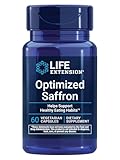
Life Extension Optimized Saffron (Satiereal)
Satiereal (0.34% safranal)
78 mg a serving
$0.17 per 30 mg
Buy on Amazon -
Nutricost Saffron Extract
0.3% safranal
88.5 mg a serving
$0.03 per 30 mg
Buy on Amazon -
Double Wood Saffron Extract
0.3% safranal
88.5 mg a serving
$0.03 per 30 mg
Buy on Amazon




Does not state a percent (1)
No standardization percent on the label, so you cannot tell how strong it is.
-
NutriRise Saffron Extract
No percent stated
88.5 mg a serving
No brand price
Buy on Amazon

Cost is per 30 mg, the trial amount, at each brand’s own price (October 18, 2026); Amazon’s can differ. Nootropics Depot’s store now sells a different saffron, so it has no brand price. Standardization is what each label states.
What “standardized” means
Real saffron gets its color from crocins, its smell from safranal and its bitter taste from picrocrocin. A lab can measure all three, and the international grading standard (ISO 3632) uses them to grade saffron. A label that states one of them, such as “7.5% crocins” or “0.3% safranal,” tells you how strong the extract is. A label that says only “saffron extract 30 mg” does not.
How saffron is faked
A 2026 review estimated that 20 to 30% of saffron spice sold is adulterated. Common fakes are safflower, marigold and turmeric, and some are colored with synthetic dyes (Mehdizadeh 2026). The review is about the spice, but it is why a supplement’s stated strength matters.
How to check your bottle
- Look for a stated percent of crocins or safranal, or a named extract like affron.
- Check the milligrams: trials used about 30 mg a day. An 88.5 mg generic extract is not the same thing.
- Look for an outside testing mark, like NSF, and search the program’s list for the product name.
Questions people ask
Is saffron from a grocery store real?
Not always. Loose saffron spice is often faked (Mehdizadeh 2026). A supplement that states its standardization is easier to trust.
What does ISO 3632 mean?
It is the international grading standard for saffron spice. It sorts saffron into grades by its color, taste and smell compounds measured in a lab. Supplements rarely print it. A stated crocin or safranal level is the brand’s own claim about strength; no outside group checks it unless the product is on a testing list.
Who should ask a doctor first?
Ask your doctor before taking saffron if you are pregnant or breastfeeding, or take an antidepressant or other medicine. Do not take more than the label says.
Sources
- Mehdizadeh M, et al. “Combating saffron fraud: a systematic review of adulteration practices, detection technologies, recommendations and challenges.” Crit Rev Food Sci Nutr. 2026. PubMed 40792566
- Testing list: NSF/ANSI 173, read August 25, 2026. Standardization from each product’s label; prices from each brand’s own page.