How Much Protein Per Day: 0.8 g per kg at Least, 1.6 to 2.2 to Build Muscle
Eat at least 0.8 g of protein per kg of body weight a day, and 1.6 to 2.2 g per kg if you lift weights. For a 150 lb person, that is 54 g a day, or 110 to 150 g if you lift. Spread it over 3 or 4 meals of 20 to 40 g each.
By Erin Rose Updated October 20, 2026 How we score
Ready to buy? Our pick for most people

Naked Whey
25 g a scoop · $1.84 per 25 g of protein · on the Informed Choice testing list
One scoop is 25 g of protein, and whey is its only ingredient: no sweetener or flavor. It is not the cheapest whey on a testing list: tonight MusclePharm Combat costs $1.35 per 25 g. How we picked.
How much protein a day, by goal
| Goal | Per kg a day | 150 lb person |
|---|---|---|
| Not very active (the minimum) | 0.8 g | 54 g |
| Active, or losing weight | 1.2 to 1.6 g | 80 to 110 g |
| Building muscle | 1.6 to 2.2 g | 110 to 150 g |
| Over 65 | 1.0 to 1.2 g | 70 to 80 g |
The 0.8 g minimum comes from studies of what adults need to stay in balance (Rand 2003). If you lift weights, extra protein stops adding muscle at about 1.6 g per kg (Morton 2018); the sports nutrition society’s range goes up to 2.2 (Jäger 2017). Older adults need more than younger ones to keep their muscle (Bauer 2013). Which kind of protein to buy is in our protein guide.
Work out your daily target
Which protein is right for you?
Most people can hit their number with food and one scoop of whey. These three groups need something a little different.
Over 65? Aim for about 30 g at each meal.
Older muscles need more protein at one time to start building. That is about 0.4 g per kg, close to 30 g for most people (Moore 2015). Many breakfasts fall short. One scoop of Transparent Labs gives 28 g of whey isolate, which is easy on the stomach.
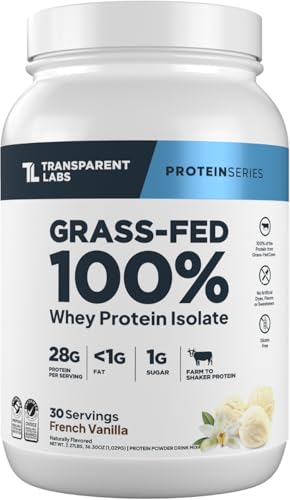
Transparent Labs Whey Isolate
28 g a scoop · $1.93 per 25 g of protein
Losing weight? Eat more protein, not less.
When you eat less, aim for 1.2 to 1.6 g per kg to hold on to muscle. That matters even more on a GLP-1 drug like Ozempic or Wegovy: see protein on GLP-1 drugs. A 30 g shake with 160 calories, in place of a snack, is an easy way to get there. It is not on a testing list; the best protein shakes names the one that is.

Premier Protein Shake
30 g a shake · 160 calories · $2.21 a shake
Plant-based? Go for 30 g a scoop.
Plant protein builds muscle almost as well as whey, and strength gains are the same (Reid-McCann 2025). Most plant powders have less leucine, the amino acid that starts muscle building, so a bigger scoop makes up the gap. Vega gives 30 g and is on three testing lists. Like most plant powders, it carries more lead than whey: Consumer Reports suggested 3 to 4 scoops a week, not one a day.

Vega Performance Protein
30 g a scoop · $1.87 per 25 g of protein
How much protein at each meal
Aim for 20 to 40 g at each of 3 or 4 meals, or about 0.4 g per kg (Schoenfeld 2018). In young men after lifting, 20 g built muscle about as well as 40 g (Moore 2009). People who spread their protein evenly over the day built about 25% more muscle protein in 24 hours than people who ate most of it at dinner (Mamerow 2014).
How much protein is in one scoop
We read 675 labels of protein powders in the NIH label database; 673 list the protein a scoop. The typical scoop holds 25 g of protein, and 89% hold at least 20 g, enough for one meal. So one scoop is a full serving, and the cheapest tub that gives 20 g or more does the job as well as an expensive one.
| Protein a scoop | Share of labels |
|---|---|
| 25 g | 31% |
| 20 g | 14% |
| 26 g | 9% |
| 24 g | 9% |
| 30 g | 8% |
A scoop fills a gap; it is not your whole day. A 165 lb lifter aiming for 120 g would need about 5 scoops to get it all from powder, so most of it should still come from food.
Questions people ask
Is there an “anabolic window” after a workout?
Not a 30-minute one. A review of 23 trials found that the protein you eat in a whole day mattered, and the timing around a workout did not once total protein was the same (Schoenfeld 2013).
Does a high-protein diet hurt your kidneys?
Not in healthy adults. A review of trials found no difference in kidney function between people on higher and normal protein (Devries 2018). If you already have kidney disease, ask your doctor before you eat more protein.
Sources
- Rand WM, et al. “Meta-analysis of nitrogen balance studies for estimating protein requirements in healthy adults.” Am J Clin Nutr. 2003. PubMed 12499330
- Morton RW, et al. “A systematic review, meta-analysis and meta-regression of the effect of protein supplementation on resistance training-induced gains in muscle mass and strength in healthy adults.” Br J Sports Med. 2018. PubMed 28698222
- Jäger R, et al. “International Society of Sports Nutrition Position Stand: protein and exercise.” J Int Soc Sports Nutr. 2017. PubMed 28642676
- Bauer J, et al. “Evidence-based recommendations for optimal dietary protein intake in older people: a position paper from the PROT-AGE Study Group.” J Am Med Dir Assoc. 2013. PubMed 23867520
- Moore DR, et al. “Protein ingestion to stimulate myofibrillar protein synthesis requires greater relative protein intakes in healthy older versus younger men.” J Gerontol A Biol Sci Med Sci. 2015. PubMed 25056502
- Moore DR, et al. “Ingested protein dose response of muscle and albumin protein synthesis after resistance exercise in young men.” Am J Clin Nutr. 2009. PubMed 19056590
- Schoenfeld BJ, Aragon AA. “How much protein can the body use in a single meal for muscle-building? Implications for daily protein distribution.” J Int Soc Sports Nutr. 2018. PubMed 29497353
- Mamerow MM, et al. “Dietary protein distribution positively influences 24-h muscle protein synthesis in healthy adults.” J Nutr. 2014. PubMed 24477298
- Schoenfeld BJ, et al. “The effect of protein timing on muscle strength and hypertrophy: a meta-analysis.” J Int Soc Sports Nutr. 2013. PubMed 24299050
- Devries MC, et al. “Changes in Kidney Function Do Not Differ between Healthy Adults Consuming Higher- Compared with Lower- or Normal-Protein Diets: A Systematic Review and Meta-Analysis.” J Nutr. 2018. PubMed 30383278
- Reid-McCann RJ, et al. “Effect of Plant Versus Animal Protein on Muscle Mass, Strength, Physical Performance, and Sarcopenia: A Systematic Review and Meta-analysis of Randomized Controlled Trials.” Nutr Rev. 2025. PubMed 39813010
- Protein powder labels: NIH Dietary Supplement Label Database, 675 labels read, 673 with protein per serving.