Prenatal Vitamins: When to Start, What to Look for and Which to Buy
Start a prenatal vitamin at least a month before you try to get pregnant, and pick one with 400 to 800 mcg folic acid, 150 mcg iodine and 27 mg iron. Only 6 of the 14 best sellers we checked have all three. Our pick: Nature Made Prenatal Multi + DHA, $0.21 a day.
By Erin Rose Updated October 22, 2026 How we score
Costs are list prices per day, checked October 21, 2026.
What to buy
Nature Made Prenatal Multi + DHA is our pick. One softgel a day has the folic acid, iodine and iron above, plus 200 mg DHA. It is USP Verified and costs the least a day of the prenatals on a public testing list.

Nature Made Prenatal Multi + DHA
$0.21 a day · USP Verified
Where to go next
- Best prenatal vitamins: all 14 we scored, ranked, with a pick for choline, gummies and the lowest cost.
- Third-party tested prenatal vitamins: which ones are on a public testing list, and what each nutrient is for.
- Prenatal vitamins with methylfolate and DHA: the best one with both, and how much DHA each has.
When to start, and how long to take it
Start at least 1 month before you try to get pregnant (ACOG, USPSTF). Some sites say 3 months. Sooner is fine. The CDC says anyone who could get pregnant should get 400 mcg of folic acid every day, planned or not. Had a pregnancy with a neural tube defect? Ask your doctor about 4 mg (4,000 mcg) of folic acid a day as a separate pill (ACOG).
Then keep taking it once you are pregnant (ACOG). Folic acid matters most early, from a month before pregnancy through the first 2 to 3 months (USPSTF). After the birth, your ob-gyn may tell you to stay on it while you breastfeed (ACOG), though no official advice sets an end date. The American Thyroid Association asks for 150 mcg of iodine a day while breastfeeding, the same as in pregnancy.
What a prenatal needs
Three amounts matter most: at least 400 mcg folic acid (667 mcg DFE on the label), 150 mcg iodine and 27 mg iron. Of the 14 best sellers we read, 3 have no iron at all, and 4 more have less than 27 mg. Not one has the 450 mg of choline pregnancy calls for. ACOG says to get choline from food for that reason. See what each nutrient is for.
Prenatal or a regular multivitamin?
If you are pregnant or trying, take a prenatal. It has the extra iron and folic acid pregnancy needs.
- Iron: 18 mg a day for women who are not pregnant, and 27 mg in pregnancy (ACOG).
- Folic acid: prenatals often have 800 or 1,000 mcg, more than the 400 mcg minimum (NIH).
- Iodine and choline: many prenatals have little or none (NIH).
Not planning a pregnancy? A regular one fits better. See multivitamins for women.
If your prenatal makes you sick
Try to keep taking it. ACOG says a vitamin taken before and during pregnancy lowers the risk of severe nausea and vomiting. If the pill upsets your stomach:
- Take it with a meal or a snack, or at night instead of the morning (Minnesota WIC).
- Split the dose: half in the morning, half at night (Minnesota WIC).
- Suspect the iron. High doses can cause nausea, an upset stomach and constipation, more so on an empty stomach (NIH).
- For morning sickness itself, vitamin B6 is a safe first thing to try from the drugstore (ACOG).
- For constipation, aim for about 25 g of fiber a day and drink plenty of water (ACOG).
Still can’t keep a pill down? A gummy may be easier. OLLY The Essential Prenatal Gummies are the lowest cost gummy on a testing list (NSF/ANSI 173). They have no iron, so ask your doctor if you need an iron pill.
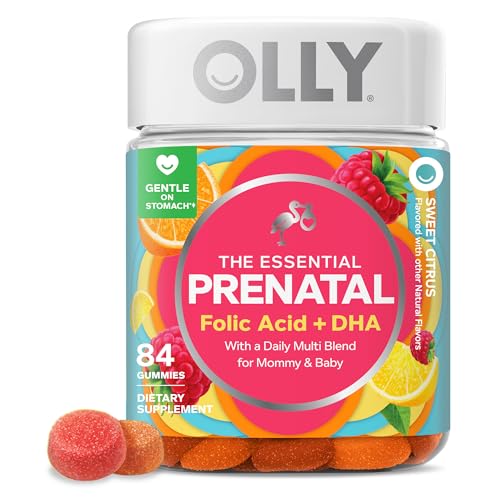
OLLY The Essential Prenatal Gummies
$0.43 a day · NSF/ANSI 173 · no iron
Taking a prenatal when you are not pregnant
Many people take a prenatal for thicker hair. We found no trial that tested that. The idea usually comes from biotin, and NIH says biotin’s hair claims rest on a few case reports and small studies. Dermatologists advise biotin only if you are low in it (AAD). High biotin can also throw off blood tests, so tell your doctor before one (FDA).
A prenatal also has more iron than you need when you are not pregnant, and after 50 you need just 8 mg a day (NIH). People with hemochromatosis should not take iron pills unless their doctor says to (NIH). Want a vitamin for hair? See the best hair, skin and nails vitamins.
Don’t double up
Take one prenatal a day, and not a prenatal plus a multivitamin. ACOG warns that some ingredients, like vitamin A, can cause birth defects if you double or triple the dose. Keep the retinol kind of vitamin A under 3,000 mcg RAE a day (NIH).
Watch iron too. The adult upper limit is 45 mg a day (NIH), and some prenatals already have 45 mg. Check the iron on your label, and don’t add an iron pill unless your doctor tells you to.
Questions people ask
Can I take folic acid alone instead of a prenatal?
For the birth-defect benefit, yes: the USPSTF counts a folic acid pill or a multivitamin with 400 to 800 mcg. A prenatal also adds the iodine and iron pregnancy needs, in the same pill.
Is a prescription prenatal better?
Not by what the label shows. In studies that compared them, prescription prenatals often listed fewer vitamins and minerals, though more folic acid, and either kind could meet pregnancy needs.
Sources
- American College of Obstetricians and Gynecologists. “Good Health Before Pregnancy: Prepregnancy Care” (FAQ). acog.org
- US Preventive Services Task Force. “Folic Acid Supplementation to Prevent Neural Tube Defects: Preventive Medication.” Final recommendation, 2023. uspreventiveservicestaskforce.org
- CDC. “About Folic Acid.” cdc.gov
- ACOG. “Breastfeeding Your Baby” (FAQ). acog.org
- “Iodine supplementation for pregnancy and lactation, United States and Canada: recommendations of the American Thyroid Association.” Thyroid. 2006. PubMed 17042677
- NIH Office of Dietary Supplements. “Multivitamin/mineral Supplements” fact sheet for health professionals. ods.od.nih.gov
- ACOG. “Morning Sickness: Nausea and Vomiting of Pregnancy” (FAQ). acog.org
- Minnesota Department of Health, WIC. “Gummy Prenatal Vitamins.” health.mn.gov
- NIH Office of Dietary Supplements. Iron fact sheets for health professionals and consumers. ods.od.nih.gov
- ACOG. “What can help with constipation during pregnancy?” acog.org
- NIH Office of Dietary Supplements. Biotin fact sheet for health professionals. ods.od.nih.gov
- American Academy of Dermatology. “Supplements: debunking common myths.” 2024. aad.org
- FDA. “Biotin Interference with Troponin Lab Tests.” fda.gov
- ACOG. “Healthy Eating During Pregnancy” (FAQ001). acog.org
- NIH Office of Dietary Supplements. Vitamin A fact sheet for health professionals. ods.od.nih.gov
- “Is Nutrient Content and Other Label Information for Prescription Prenatal Supplements Different from Nonprescription Products?” J Acad Nutr Diet. 2017. PubMed 28571654
- “Comparison of reported versus measured content of over-the-counter and prescription prenatal multivitamins and minerals.” J Am Pharm Assoc. 2021. PubMed 33414014